
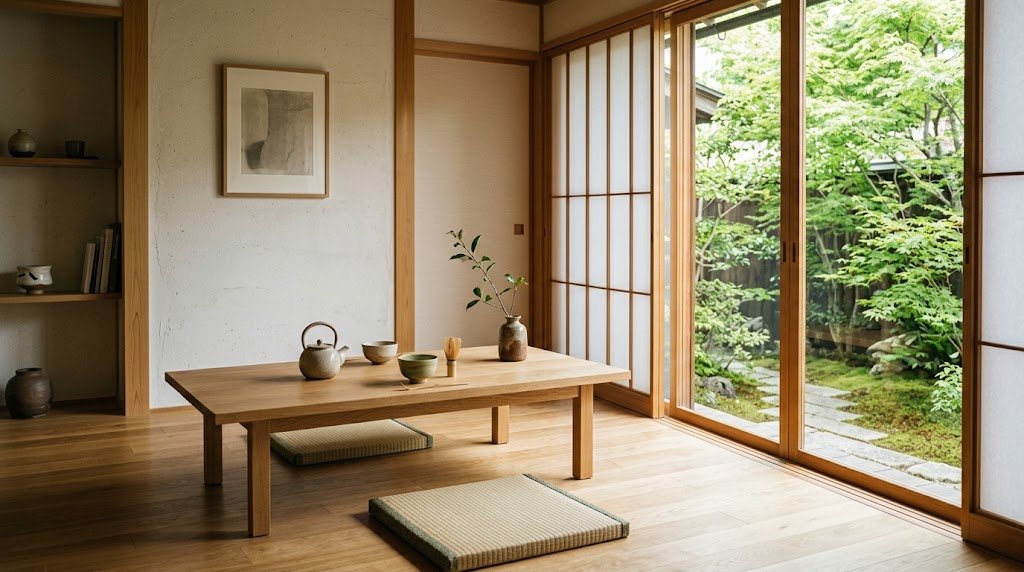
Step inside a home where the chaos of the city instantly melts away, replaced by the soothing scent of natural timber and the gentle dance of daylight across bare surfaces. This is not a luxury retreat tucked away in the mountains of Kyoto, but the rapidly growing reality of modern urban living through Japanese natural minimalist interior design.
Across the globe, homeowners are trading cluttered rooms and flashy decor for intentional simplicity. By pairing the core principles of Wabi-Sabi—the beauty found in imperfection—with warm functional layouts, this timeless aesthetic turns ordinary houses into peaceful, breath-easy sanctuaries.
The Golden Trio: Wood, Earth, and Air
At the heart of every authentic Japanese minimalist space lies a deep, reverent connection to nature. Rather than relying on bold paint palettes or elaborate artwork, these interiors derive their personality from organic materials like light oak, bamboo, rattan, and smooth river stone.
Unvarnished timber dominates furniture frames, wall panels, and open shelving, allowing the raw grain of the wood to tell its own quiet story over time. Combined with low-VOC clay finishes and unbleached linen upholstery, the atmosphere feels undeniably grounded, raw, and deliciously authentic.
Mastering the Magic of Natural Light
Forget heavy drapery and ornate window frames that trap dust and block the sky. Japanese natural design treats sunshine as the most valuable piece of furniture in the room, prioritizing generous openings and unobstructed light flow throughout the home.
Translucent paper screens (shoji) and sheer alabaster curtains soft-focus harsh rays, scattering a gentle glow across polished concrete or pale hardwood floors. This clever interplay of shadows gives smaller rooms an illusion of depth while keeping energy levels naturally high from dawn to dusk.
The Power of Low-Profile Living
Look lower than usual when walking through a Japandi or traditionally inspired living room. One of the signature elements of this style is floor-level or low-profile furniture designed to keep your line of sight completely open and wide.
Plush tatami mats, short tea tables, and legless lounge chairs (zaisu) encourage a closer, more grounded relationship with your surrounding floor space. By keeping the top half of every room entirely clear, air circulates better, ceilings feel substantially higher, and visual weight is eliminated.
Curating Intentional Ma (Negative Space)
In Western design culture, an empty corner often feels like a missed opportunity waiting for an accent table or a tall lamp. Japanese minimalist philosophy views that empty room through the lens of Ma—the artistic concept of negative space.
Ma is the purposeful pause between notes in a musical masterpiece, giving equal importance to what is absent as to what is present. Leaving walls bare and surfaces uncluttered provides your eyes a place to rest, reducing daily mental fatigue and inviting quiet contemplative moments.
Bringing the Outdoors In with Modern Courtyards
Where structural space permits, integrating a micro-courtyard or an indoor planter box creates a dynamic focal point that evolves with each changing season. A single bonsai, a patch of lush moss, or a solitary weeping maple tree brings vibrant life into the home.
For apartment dwellers, this green connection can easily be adapted using a minimalist sliding glass door leading to a balcony adorned with simple slate tiles, a low wooden bench, and a few thoughtfully placed bamboo stalks.
Functionality Hidden in Plain Sight
Minimalism fails instantly without brilliant, hyper-efficient storage solutions to hide the messy realities of day-to-day life. Japanese architecture excels at seamlessly blending hidden cabinets, wall-recessed niches, and under-floor storage into bare wooden partitions.
Sliding wooden panels replace standard swinging doors, saving precious square footage while effortlessly concealing entertainment systems, laundry units, and cluttered pantries. When everything has a designated place out of view, maintaining a spotless, calming environment becomes practically effortless.
Soft Neutrals and Earthy Textures
The color palette of a Japanese natural home is far from boring, relying on rich textural variations rather than jarring contrasting hues. Creamy off-whites, warm oats, muted sage greens, and soft charcoal tones form a harmoniously neutral backdrop.
Texture replaces pattern; a hand-knotted wool rug, a coarse ceramic vase, or a hand-woven reed basket adds subtle depth without disrupting the visual peace. Every touchable surface invites a tactile experience, celebrating the warm tactile beauty of unrefined craftsmanship.
Steps to Japanese Minimalist Living
-
Declutter relentlessly: Keep only items that serve a daily purpose or bring genuine happiness, storing the rest entirely out of sight.
-
Lower your eye level: Opt for low-slung platform beds, floor cushions, and short coffee tables to create an expansive overhead feeling.
-
Prioritize raw materials: Swap out synthetic plastics and shiny metals for light oak, natural rattan, linen, and ceramic elements.
-
Embrace imperfections: Display handcrafted stoneware or aged wood pieces that showcase unique cracks, weathered knots, and organic lines.
-
Maximize natural illumination: Keep window coverings light, airy, and minimal to allow soft daylight to freely flood every living area.
A Sustainable Way of Tomorrow
Adopting a Japanese natural minimalist home design is ultimately far more than a trendy decor update; it represents a meaningful shift toward slow, mindful living. By choosing durable organic materials and buying fewer, higher-quality pieces, you naturally reduce waste while elevating your everyday quality of life.
Your home transformed into a Japanese-inspired sanctuary becomes an anchor of calm amidst an increasingly fast-paced world—a tranquil space where you can finally slow down, take a deep breath, and appreciate the serene elegance of simple living.